How to Ask Customers for Google Reviews (Without Being Awkward)


TL;DR: The best way to get more Google reviews is to ask in person, at the moment your customer is happiest, and make leaving the review take one tap. Automated texts work, but a real person asking works far better. Below are the exact scripts, the right timing, and the one mistake that kills your response rate.
You already know reviews matter. Eighty-one percent of consumers check Google before they ever walk in or call (Bright Local), and most of them only need to read a few recent reviews to make up their mind. So the question is not “should I ask for reviews.” It is “how do I ask without feeling like I am begging.”
Here is the good news. Asking for a review is not pushy when you do it right. It is just one more part of good service.
If you want the bigger picture on why reviews drive local rankings, start with how Google reviews affect local SEO or our broader local SEO guide for small businesses.
Ask in person, while they are still smiling
The single biggest lever is timing. A happy customer who is standing in front of you right now will leave a review at a far higher rate than the same customer who gets a text three hours later from their couch.
Call it the peak-happiness moment. The plates are cleared and they are leaning back. The tech just showed them the wasps are gone. The stylist just spun the chair around. That is when you ask.
Compare that to the usual approach: sending a review link by text after the customer has left and hoping they tap it. Most people never do. You are competing with their group chat, their email, and the rest of their day.
The words to use
Keep it short, honest, and specific. Do not read a script at them. Here are three that work:
Restaurant or cafe: “So glad you enjoyed it. If you have ten seconds, a quick Google review really helps our team. I can pull it up right here for you.”
Home service or field work: “Happy we got that sorted for you. Most of our new customers find us through Google reviews. Would you mind leaving one? It takes about a minute and I can tap it open for you right now.”
Salon, dental, or appointment-based: “It was great seeing you today. If you have a second, a Google review means a lot to us. Here, let me hand you the card.”
Notice what all three have in common. They are warm, they explain why it helps, and they remove the work by opening the review page for the customer on the spot.
Make it one tap, not a treasure hunt
The fastest way to lose a review is to make the customer go find you. “Search for us on Google, scroll down, find the reviews button” is three steps too many.
This is exactly why QR codes give businesses a meaningful bump on their own. The customer does not have to search. They point their phone and the review page opens.
A tap-enabled card does the same thing with even less friction. The customer taps the card to their phone and your Google review page opens instantly. No app, no typing, no searching. We broke down how QR codes compare to NFC tap cards if you want to see the difference in practice.
Let your team do the asking
Here is the part most owners miss. You should not be the only one asking. Your team is the one in front of the customer at the peak-happiness moment, and customers love leaving reviews that name the person who took care of them.
When Casa Salza, a family-owned restaurant in Spanish Fork, trained its team to ask directly and handed customers a card to tap, reviews went from a handful a month to 35 in two weeks. Real reviews started naming real team members: “Friendliest service from a boy named Zack.” Read the full Casa Salza story here.
That naming effect is powerful, and it gives your team a reason to care. When a review can be traced back to the person who earned it, asking stops feeling like a chore and starts feeling like recognition.
The mistakes to avoid
- Do not ask everyone the same generic way. Match the ask to the moment.
- Do not gate reviews. Asking only your happy customers to leave a public review while sending unhappy ones to a private form is against Google’s guidelines and it will catch up with you.
- Do not make it a project. If leaving a review takes more than a minute, you have already lost most people.
- Do not stop after one good month. Recency matters. Two out of three consumers consider reviews older than 90 days irrelevant (Checkkit), so the asking has to be a habit, not a campaign.
Make asking automatic
The owners who win at reviews are not working harder. They built a system where asking happens on every visit, the link opens in one tap, and the credit goes to the team member who earned it.
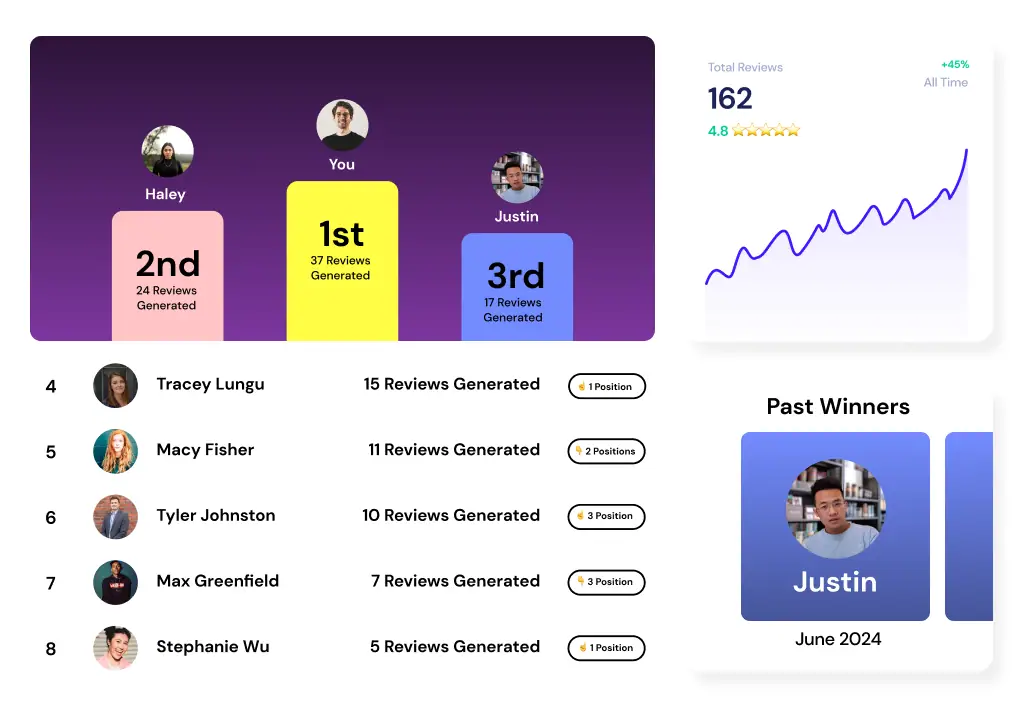
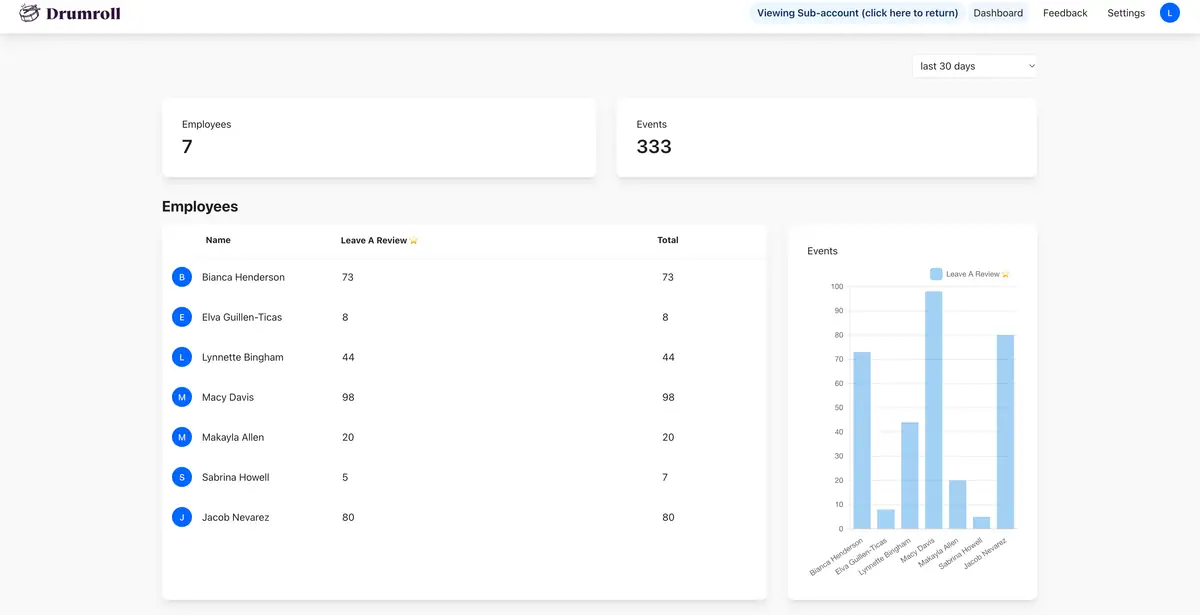
That is what Drumroll does. Each team member gets a tap-enabled card linked to your Google review page, every review is tracked back to the person who earned it, and your top performer gets a reward each month. No chasing, no spreadsheets.
If you want to show a customer what a great review looks like before they write one, see these positive review examples by industry. Once reviews start coming in, make sure your listing is set up to convert them into rankings with our Google Business Profile optimization guide.
If you want to see how it works for a business like yours, book a quick demo.
Keep crushing.
FAQ
What is the best way to ask customers for Google reviews?
Ask in person at the peak-happiness moment, right after they have had a great experience. Keep the ask short, explain that it helps the business, and make leaving the review one tap so they do not have to search for you.
What should I say when asking for a Google review?
Something short and honest works best. For example: “If you have ten seconds, a quick Google review really helps our team. I can pull it up right here for you.” Adjust the wording to fit your business and the moment.
Is it okay to ask only happy customers for reviews?
No. Google’s guidelines require that you ask customers for reviews without filtering by sentiment. Routing unhappy customers to a private feedback form while only sending happy customers to Google is against the rules and can result in your reviews being removed.
How many Google reviews do I need to rank locally?
There is no exact threshold, but recency and consistency matter more than hitting a specific number. Two out of three consumers consider reviews older than 90 days irrelevant, which means you need a steady stream, not a one-time push.

Join the large list of small businesses using Drumroll!