What Is Local SEO? A Small Business Owner's Guide (2026)


TL;DR: Local SEO is the work you do to show up when nearby customers search for a business like yours on Google. The five levers that actually move the needle are your Google Business Profile, your reviews, consistent contact info across the web, location pages on your site, and local links. Reviews are the fastest one to pull, and most owners underuse them.
If you own a local business, local SEO is how people in your area find you on Google when they need what you sell. Someone searches “coffee near me” or “plumber in Provo,” and Google decides which handful of businesses to show first. Local SEO is everything you do to be one of those businesses.
This is a plain-English guide for owners, not a technical manual. By the end you will know what local SEO actually is, the five things that move your rankings, and a 30-minute checklist to start today.
Local SEO vs Regular SEO: What’s the Difference
Regular SEO is about ranking a web page for a search anywhere in the world. Local SEO is about ranking for searches tied to a place, usually with local intent like “near me,” a city name, or a neighborhood.
The clearest sign you are looking at local SEO is the Map Pack. That is the block of three businesses with a map that Google shows near the top for local searches. Google introduced it back in 2014, and it has been prime real estate ever since. The businesses in that pack get the calls, the directions taps, and the foot traffic.
Here is the part owners miss: the Map Pack and the regular blue links are ranked by different signals. You can have a beautiful website and still be invisible in the Map Pack if you ignore the levers below. The good news is those levers are mostly free and within your control.
The 5 Levers That Move Local Rankings
1. Your Google Business Profile
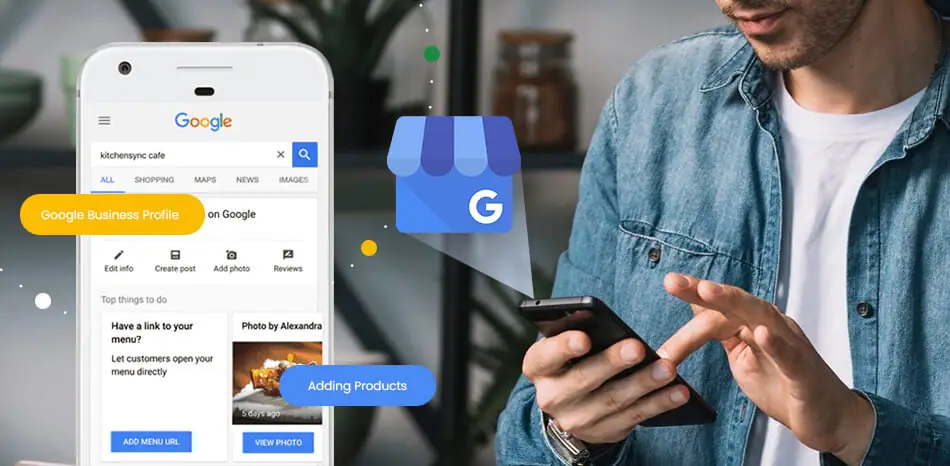
Your Google Business Profile is the listing that powers the Map Pack and the panel that shows up when someone Googles your name. It is the single most important asset in local SEO, and you own it for free.
Fill out every field. Pick the right primary category. Add real photos, your hours, your service area, and your products. A complete, active profile tells Google you are a real, open business worth showing. We go deep on this in our Google Business Profile optimization guide.
2. Reviews
Reviews are the lever most owners underrate, and they are the reason this guide exists. According to BrightLocal, the large majority of consumers use Google to evaluate local businesses before they ever call. Your star rating and review count are right there in the Map Pack, deciding who taps and who scrolls past.
Reviews do two jobs at once. They build trust with the human reading them, and they feed Google fresh, relevant signals about your business. One study cited by Mara Solutions found a 5-star rating can boost clicks from the Local Pack by 25%. More on this in the easiest way to improve your SEO as a small business.
3. NAP Consistency
NAP stands for name, address, and phone number. Local SEO rewards consistency: your business should show the exact same name, address, and phone everywhere it appears online, from your website to Yelp to your Google Business Profile to old directory listings.
When Google sees the same details in the same format across the web, it trusts that your business is legitimate and that the address is real. When it sees three different phone numbers and two spellings of your street, that trust drops. Pick one format and clean up the rest.
4. On-Page and Local Content
This is the website lever. Your site should make it obvious what you do and where you do it. Put your city and service area in your page titles and headers, build a page for each main service, and if you serve several towns, give each one its own location page.
You do not need to write a novel. You need pages that clearly answer “what do they do, where, and why them” so Google can match you to local searches.
5. Local Links
Links from other local websites are the hardest lever, and that is exactly why they matter. A link from the chamber of commerce, a local news story, a supplier, or a sponsored youth team tells Google you are a real fixture in the community.
You do not need hundreds. A handful of genuine local links, earned over time, separates you from competitors who only ever set up their profile and stopped.
Why Reviews Are the Lever to Pull First
If you only have time for one of these, start with reviews. Here is the logic.
Your Google Business Profile takes an afternoon to perfect, and then it mostly sits. NAP cleanup is a one-time chore. Content and links pay off slowly over months. Reviews, on the other hand, compound week after week, show up directly in the Map Pack, and influence both Google and the customer at the same time.
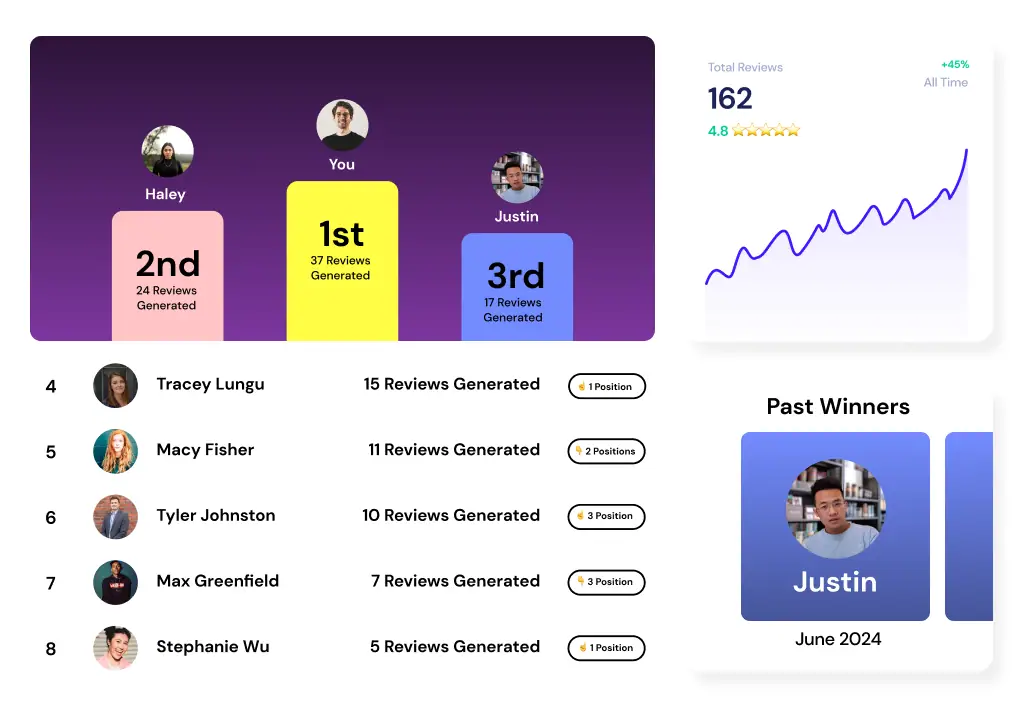
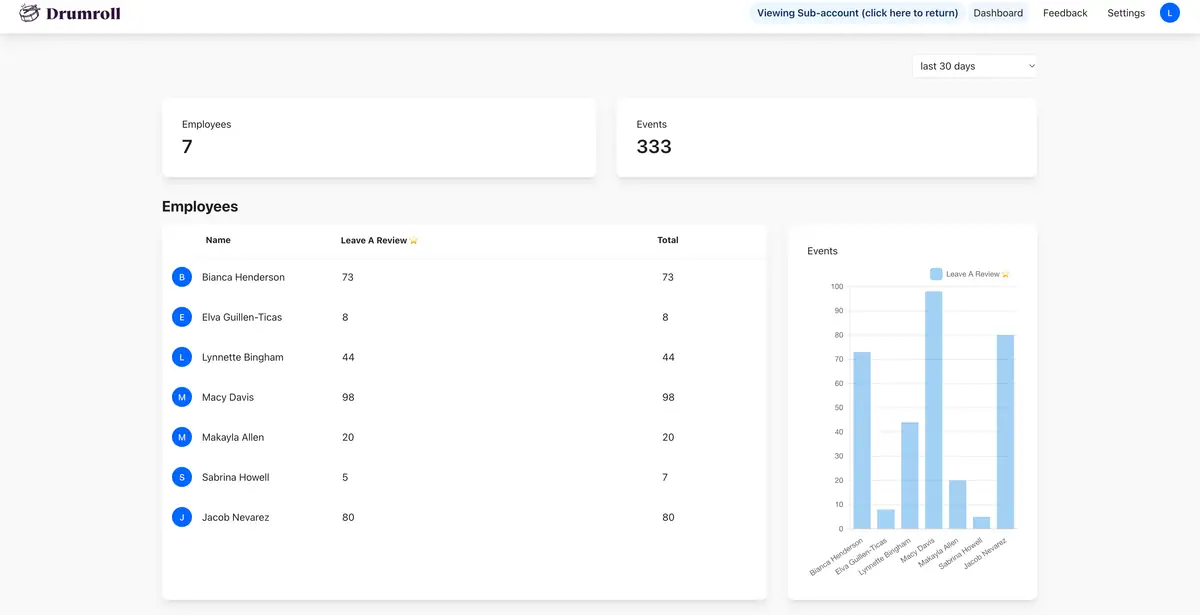
The catch is that getting reviews consistently is hard. Customers forget, your team feels awkward asking, and a link buried in a follow-up email rarely gets tapped. That is the exact problem Drumroll was built to fix. Each team member gets a special card that works kinda like Apple Pay. You tap it and a link pops up for the customer to leave a review, right at the moment they are happiest. You also see which team members are driving reviews, so you can recognize the ones who do.
Crave Cookies in Las Vegas used this approach to generate over 333 Google reviews in six weeks. Read how to get more Google reviews for the full playbook, start with how to ask customers for Google reviews for the exact scripts and timing, or browse positive review examples by industry to see what a great review looks like.
A 30-Minute Local SEO Starter Checklist
You can make real progress today. Set a timer.
- Claim and complete your Google Business Profile. Verify ownership, pick the right primary category, add hours, photos, and your service area.
- Check your NAP. Search your business name and confirm your name, address, and phone match everywhere. Fix the worst offenders first.
- Read your last 10 reviews. Reply to every one, good or bad. Replies signal an active business. See how to respond to Google reviews for templates by star rating, or how to respond to negative reviews without making things worse.
- Set up a way to ask. Decide how your team will ask for a review after every job. A tap is far easier than a typed-out link.
- Add your city to your homepage title. A small on-page win Google notices.
Do this and you are already ahead of most local competitors, who claim a profile and then forget it exists.
Local SEO FAQ
What is local SEO in simple terms? Local SEO is the work you do so your business shows up on Google when nearby customers search for what you offer, especially in the Map Pack and on Google Maps.
How long does local SEO take to work? Profile and review improvements can show up in weeks. Content and link building are a longer game measured in months. Reviews are the fastest lever because they update your Map Pack presence continuously.
Do Google reviews really affect local rankings? Yes. Reviews are a ranking signal and a trust signal. Star rating and review count appear directly in the Map Pack, and a strong rating can lift clicks from the Local Pack by around 25% according to studies cited by Mara Solutions. For a deeper breakdown of every signal Google measures, see do Google reviews help SEO.
Can I do local SEO myself? Yes. The core levers, your profile, reviews, NAP consistency, and basic on-page content, are all things an owner can handle. Tools like Drumroll make the review lever run on its own.
Start With the Fastest Lever
Local SEO is not one big project. It is five levers, and reviews are the one that pays off fastest and compounds the longest. Reviews are the fastest local-SEO lever to pull, and Drumroll makes pulling it automatic. Book a demo and see how a single tap turns happy customers into Google reviews.

Join the large list of small businesses using Drumroll!