Do Google Reviews Help SEO? What the Data Actually Says


TL;DR: Yes, Google reviews are a confirmed local ranking signal. The four things Google weighs are review count, average rating, recency, and the words customers actually write. Recency is the one most owners ignore, and it is likely costing you ranking positions in the Map Pack.
Yes, Google reviews help SEO. This is not just conventional wisdom. Google has confirmed reviews as a ranking factor for local search, and the research backs it up.
More specifically, reviews feed the algorithm that determines whether your business shows up in the Map Pack, the block of three businesses Google shows at the top of most local searches. The customers who click, call, and come in are mostly coming from that block. Reviews are one of the fastest levers you have to get into it.
Here is exactly how it works.
The 4 Review Signals Google Weighs
Google does not just count stars. It evaluates four distinct signals from your reviews, and understanding each one changes how you think about asking for them.
1. Review count
Sheer volume matters. A business with 200 reviews will generally outrank one with 20 in the same category, everything else being equal. Volume signals to Google that many customers have interacted with your business and found it worth rating.
2. Average rating
Your star rating does visible work. Research cited by Mara Solutions found that 56% of consumers prefer to click on businesses with positive reviews in the Local Pack. Your rating is right there in the Map Pack, deciding who taps through and who scrolls past.
3. Recency
This is the signal most owners miss. Google weights fresh reviews more heavily than old ones because recent activity tells the algorithm your business is currently operating and customer-focused.
According to research by Checkkit, over two-thirds of consumers consider reviews older than 90 days irrelevant. From a ranking standpoint, businesses with infrequent review activity start to look stale to Google, even if their total count is high.
4. Review content and keywords
What customers actually write matters. When a review says “best pizza in Austin” or “great plumber in Portland,” Google indexes that text. Mentions of your service category and city reinforce the keywords you want to rank for, without any extra work on your part.
Why Recency Is the Signal That Compounds
A business with 400 reviews from two years ago is not automatically beating a business with 40 reviews from the last 30 days. Recency compounds because every new review is a fresh signal to Google. Old ones gradually lose weight.
The threshold that matters: over 80% of consumers need your most recent review to be within 2 to 4 weeks to form a favorable impression of your business, according to Checkkit’s research. A visible gap in your review activity is noticed by customers and by Google.
This is why consistency matters more than one-time pushes. Getting ten reviews this week and none for the next three months is weaker than getting three reviews every two weeks. We break this down in detail in why consistency over quantity is what actually moves local rankings.
How Review Keywords Feed Local Rankings
When a customer writes “Dr. Chen is the best dentist in Phoenix,” that sentence does real SEO work. Google reads the text of reviews, and phrases like “dentist in Phoenix” function as organic keyword signals tied directly to your business listing.
You cannot dictate what customers write, but you can influence it. Asking for a review right after a service, while the experience is fresh, tends to produce more specific, descriptive feedback. Customers remember the details when you ask within minutes, not days.
That keyword feedback loop is one reason why ongoing review collection is more valuable than a single push campaign. Each review adds more natural language describing what you do and where you do it.
To see what strong, keyword-rich reviews look like across different industries, browse positive review examples by industry.
Every review deserves a reply, not just the bad ones. See how to respond to Google reviews for 20 copy-paste templates by star rating. When a negative one comes in, how you respond publicly matters almost as much as the rating itself. See how to respond to negative reviews to handle it right.
Reviews as Part of Your Broader Local SEO Strategy
Reviews are one of five main levers in local SEO. The others are your Google Business Profile optimization, NAP consistency, on-page content, and local links. Reviews stand out because they are the fastest lever to pull and because they work on two audiences at once: the Google algorithm and the human deciding whether to call you.
For a full breakdown of all five levers and how they work together, read what is local SEO: a small business guide.
What This Means for a Small Team
The challenge is not understanding why reviews matter. Most owners already know they do. The challenge is getting them consistently when your team is busy and asking feels awkward.
A few things work:
- Ask at the right moment. Right after a job is done is ideal. The customer is happy, the experience is fresh, and they have not yet moved on to the rest of their day.
- Make it one tap. Customers will not search for your business, navigate to your Google profile, and find the reviews section. Every extra step cuts your conversion rate.
- Put your team in the loop. You cannot be everywhere. Empowering your team members to ask, right at the point of service, turns every customer interaction into a potential review.
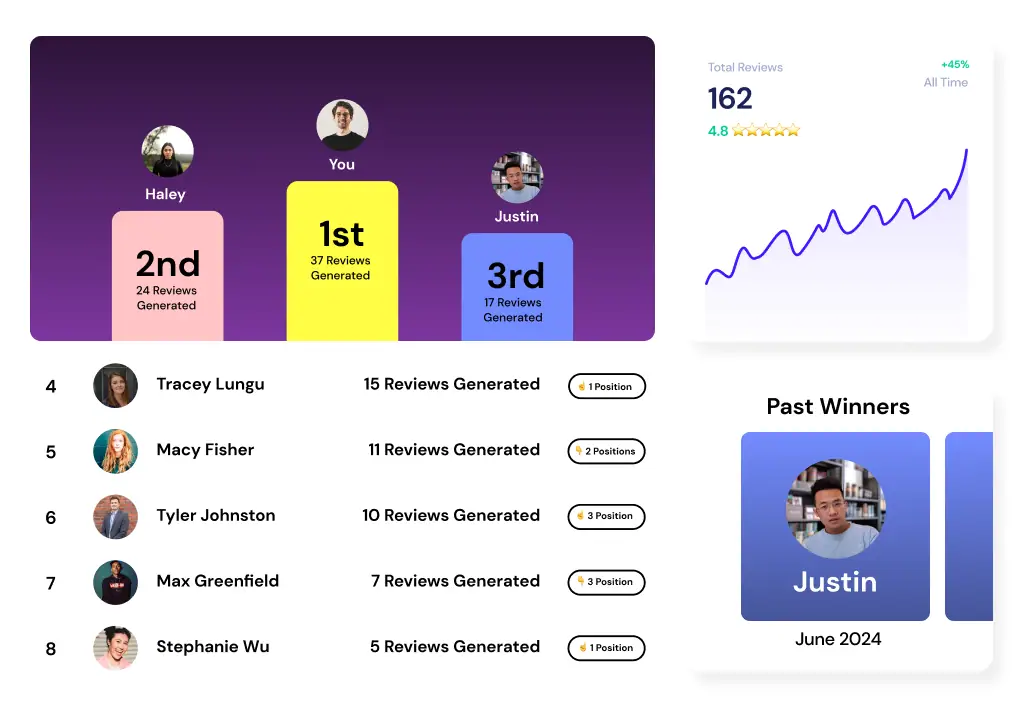
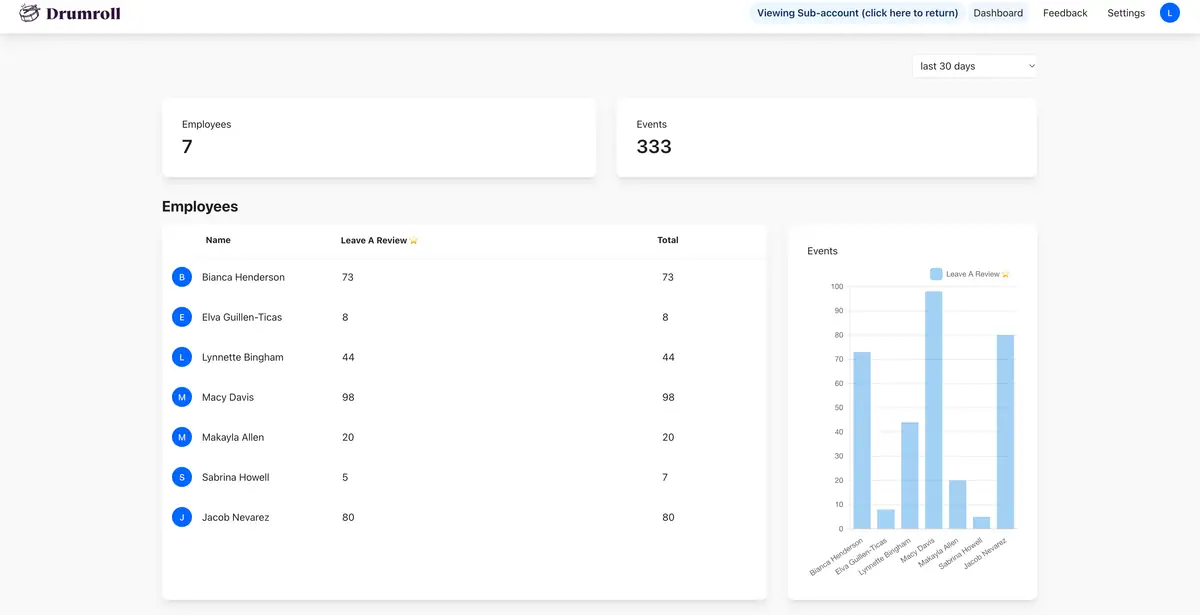
This is the problem Drumroll was built to solve. Each team member gets a special card that works kinda like Apple Pay. You tap it and a link pops up for the customer to leave a review, at the moment they are happiest. The dashboard shows you which team members are driving reviews so you can recognize the ones doing the work.
Crave Cookies in Las Vegas used this approach to generate over 333 Google reviews in six weeks.
Read how to get more Google reviews for the full playbook, or start with how to ask customers for Google reviews for exact scripts and timing.
Ready to start collecting consistent reviews? Book a demo with our team and we’ll show you how it works for your business.
Do Google Reviews Help SEO: FAQ
Do Google reviews directly affect SEO rankings?
Yes. Google has confirmed reviews as a ranking factor for local search, particularly for Map Pack results. Review count, average rating, recency, and review text all feed the algorithm.
How many Google reviews do you need to rank in the Local Pack?
There is no fixed number. Competitiveness varies by market and category. In a small town, 30 reviews might be plenty. In a competitive city category, 200 or more may be the baseline. What matters more than total count is that you are consistently adding new ones.
Do keywords in Google reviews help SEO?
Yes. Google indexes review text. When customers mention your service category and city, those terms function as organic keyword signals on your listing, reinforcing the searches you want to rank for.
How quickly do new reviews affect local rankings?
Google processes new reviews relatively quickly, often within a few days. The ranking impact is cumulative rather than instant. Consistency over weeks and months compounds the signal.
Can a business with fewer reviews outrank one with more?
Yes. A business with 40 recent reviews can outrank one with 400 old reviews in some cases, particularly in categories where recency signals are strong. Freshness matters alongside volume.
What types of reviews matter most for SEO?
Reviews that are detailed, recent, and mention specific services and locations carry the most signal. Generic one-word reviews (“Great!”) still count toward volume but add little keyword value.


Join the large list of small businesses using Drumroll!